Space research – a hybrid propulsion system test bench made using profiles.
By developing its very own sounding rocket with a hybrid propulsion system, the RAPID team is gaining valuable experience for space travel of the future.
These days, the route into space travel starts at an early stage. RAPID (Rocketry and Propulsion in Darmstadt), the rocket project being conducted by the university group TU Darmstadt Space Technology e. V. (TUDSaT), is a prime example of this. The students involved in this project are developing a sounding rocket by themselves – covering everything from the aerostructure and avionics to the propulsion system and the entire test infrastructure. The aim is not only to fly the rocket successfully, but also, in particular, to give this next generation of engineers an opportunity to gain practical know-how.
In 2025, the team entered its Hyacinth rocket into Europe’s biggest academic rocket competition, the European Rocketry Challenge (EuRoC). The students also worked together to develop and build a hybrid propulsion system for the rocket. They organised and carried out the project in their spare time, alongside their studies. When it came to building a test bench, the team opted for the item Building Kit System, as this offered various benefits, including the flexibility the students very much needed. They are now using item profiles for the launch rail, too.
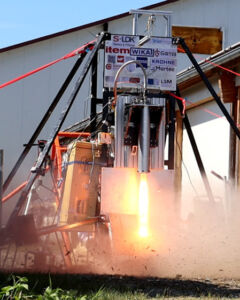 System for maximum versatility
Opt for the original item Building Kit System and enjoy the benefits of our unique range of products. The end-to-end compatibility of all components gives your creativity a whole new dimension.
RAPID and TUDSaT – the development of sounding rockets by students
TUDSaT currently has over 300 members – TU Darmstadt students from various disciplines, who are working hard on satellite, rover and rocket projects. The RAPID team is focusing on developing sounding rockets and the associated infrastructure, while also designing test benches and safety concepts. The resulting practical learning environment meets the same requirements as those associated with professional aerospace projects.
The first time the team set out to design and build a hybrid propulsion system was when it was developing its Hyacinth rocket. The students used liquid nitrous oxide as the oxidiser and a combination of wax and carbon for fuel. The system works at around 60 bar and is significantly different from conventional solid-fuel motors. To reliably analyse thrust profiles, temperatures and loads, the team needed extensive test options at ground level. The test bench was therefore a key requirement for developing the sounding rocket and its propulsion technology.
“If we want to improve our simulations, we need real measurement data from tests. The test bench provides the ideal basis for this.”
The functional principle of the test bench is relatively simple. The propulsion system is clamped securely in place, and ignition takes place under controlled conditions. During the test, sensors record various parameters including pressure, temperature and thrust. This provides important insights. “If we want to improve our simulations, we need real measurement data from tests. The test bench provides the ideal basis for this,” explains Justus Albert, a former member of the RAPID team. The data collected helps the team validate simulations and gain a better understanding of the way the hybrid propulsion system behaves. The team can also check safety mechanisms before the sounding rocket is actually launched at a later date.
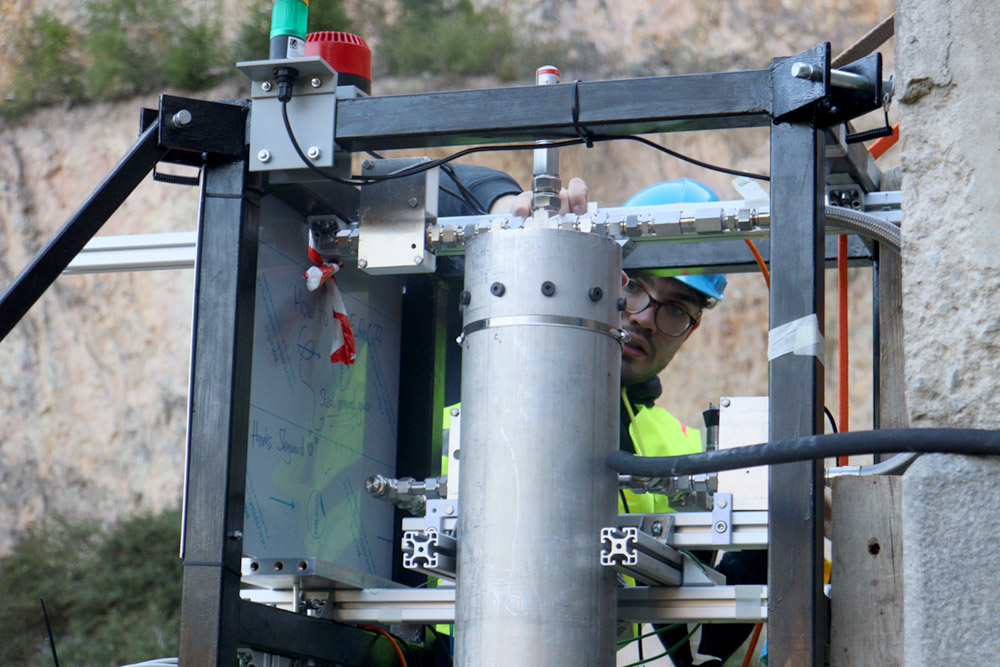
Test infrastructure supported by item profile technology
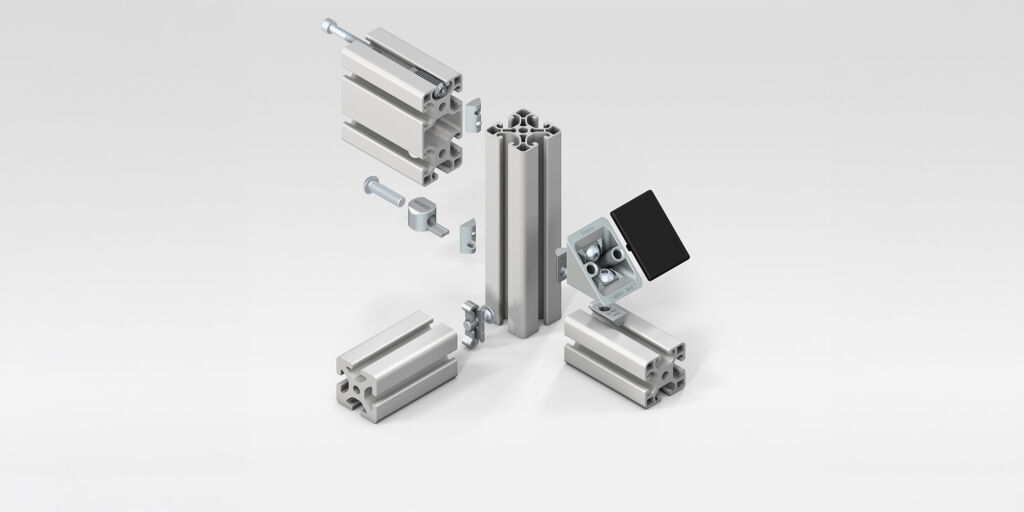
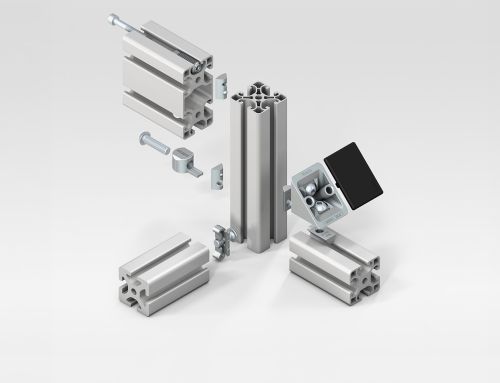
When building the test bench, the team harnessed the benefits of our aluminium profiles . Thanks to the modular design of our profile technology, it was easier for the team to make modifications during the development stage and replace individual elements quickly. This is important, because requirements change frequently, especially during the early development phase – measurement systems are added, sensor positions are adjusted and cable routing has to be changed, for example.
“The flexibility of the construction is therefore a major advantage,” Albert explains.
“When you’re working on a development project, requirements change all the time.
The flexibility of the construction is therefore a major advantage.”
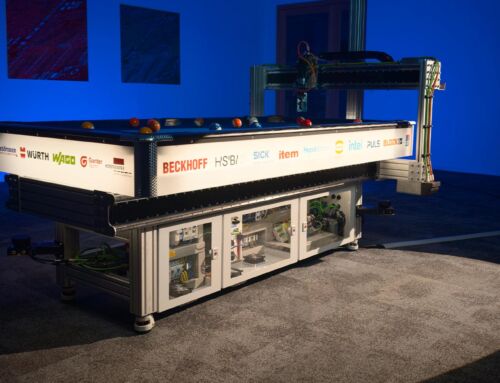
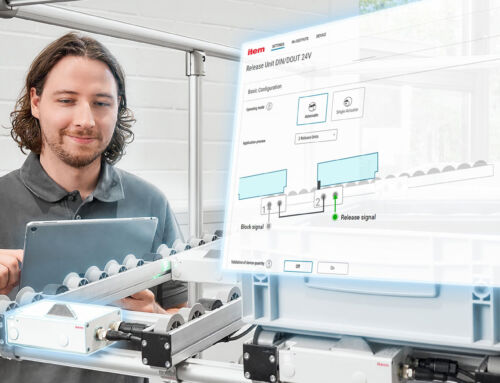
Aluminium construction profiles are used for various parts of the test bench. They provide a basis for holders, measurement structures and the integration of various test infrastructure components. The construction offers the stability that’s needed for the loads associated with testing a propulsion system, too. “The entire process was also straightforward. You design your solution online using the item Engineeringtool, which means the assembly instructions are generated automatically and the parts are delivered cut to the exact length you need, so you can simply assemble everything straight away,” Albert emphasises. As the components are both adaptable and reusable, the RAPID team can develop the test bench further on an ongoing basis. This level of flexibility is a key advantage, especially for iterative development processes.
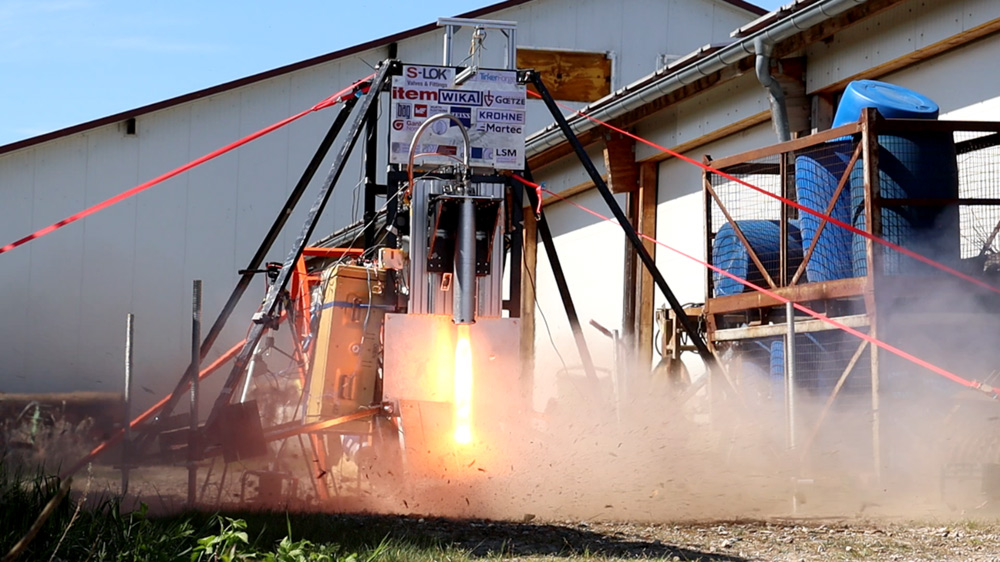
Issues when preparing for the European Rocketry Challenge
Particular issues when preparing for the 2025 European Rocketry Challenge included a lack of infrastructure and opportunities for testing. The aim of the annual European Rocketry Challenge is to develop a rocket carrying a scientific payload and to launch it to an apogee of three or nine
kilometres as accurately as possible. As it was not possible for the team to fully test the propulsion system prior to the competition, the planned launch of Hyacinth did not take place. However, RAPID still exhibited its rocket and collected valuable experience for the next development steps. RAPID finished in twelfth place in the ranking of Europe’s best student teams.
From Hyacinth to Zephyr – the next steps
The experience gained through developing Hyacinth will be applied to upcoming projects. There are firm plans to develop the test infrastructure further and to draw on the insights gained for future projects. The team still has its sights set on launching Hyacinth, with the aim of obtaining additional data for further developing the hybrid propulsion system. In designing and building Zephyr, RAPID is already pursuing the next development step. The plan is to launch this hybrid rocket to a target apogee of 3000 metres at the 2026 European Rocketry Challenge.
“We’ve already conducted three successful tests this year, so we’re using the test
bench for its intended purpose.”
“Since applying in April and being accepted to take part, we’ve completed many of the milestones involved. What’s more, we’ve already conducted three successful tests this year, so we’re using the test bench for its intended purpose,” explains Manu Schlüsener, the RAPID team’s project lead. The team is also planning a new recovery concept to reduce loads during the recovery phase, as well as a re-engineered aerostructure with removable panels to make access and maintenance work easier. There are also plans for modular avionics, which are to serve as a basis for future generations of rockets.
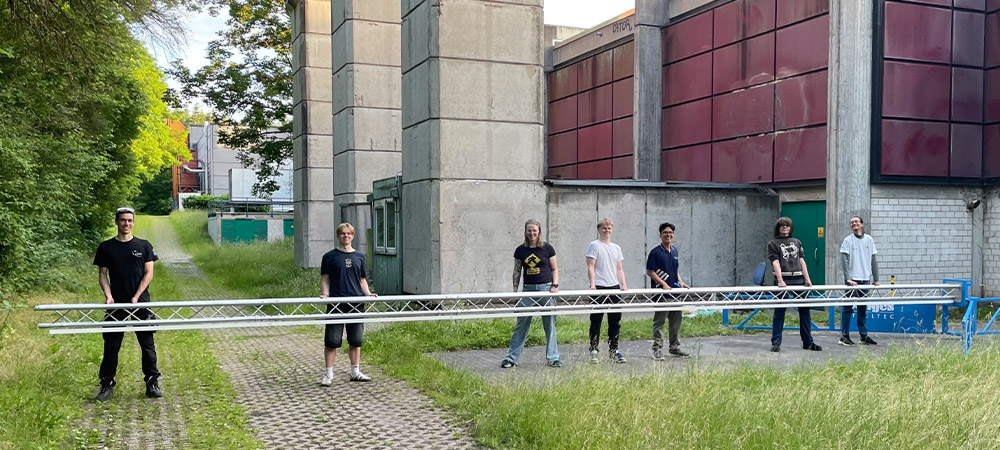
Collaboration with item is continuing, too. The team is using our profiles for its launch rail – a rail that stabilises the rocket as it takes off and guides it in the right direction until it achieves sufficient airspeed.