Signaling technology in action on the packaging line – light segments dynamically running alongside appliances provide staff with clear guidance for the relevant work process.
BSH Hausgeräte GmbH is one of the world’s leading companies in its sector and Europe’s largest manufacturer of household appliances. It makes branded products for companies such as Bosch, Siemens, Gaggenau, Neff and Thermador. This portfolio is complemented by the digital services of the ecosystem brand Home Connect. At its Dillingen site in Bavaria, BSH has been making dishwashers for the international market since 1976. This site is now home to one of the biggest and most cutting-edge dishwasher factories in the world.
In the factory’s packaging section, the appliances pass through two workstations on a conveyor belt. This is where staff apply the packaging. The dishwashers aren’t all packaged immediately, though. Some appliances are selected for audit and removed for quality control, so they need to pass through the workstations without being packaged.
To ensure these appliances are immediately identifiable on the packaging line, BSH uses smart signaling technology. This includes item Multi-Segment RGB LED Strip and item LED Strip Controller with IO-Link. The LED segments light up alongside the relevant dishwashers as they make their way through the work area. These segments clearly show which appliances mustn’t be packaged yet and which type of packaging is required for the remaining appliances.
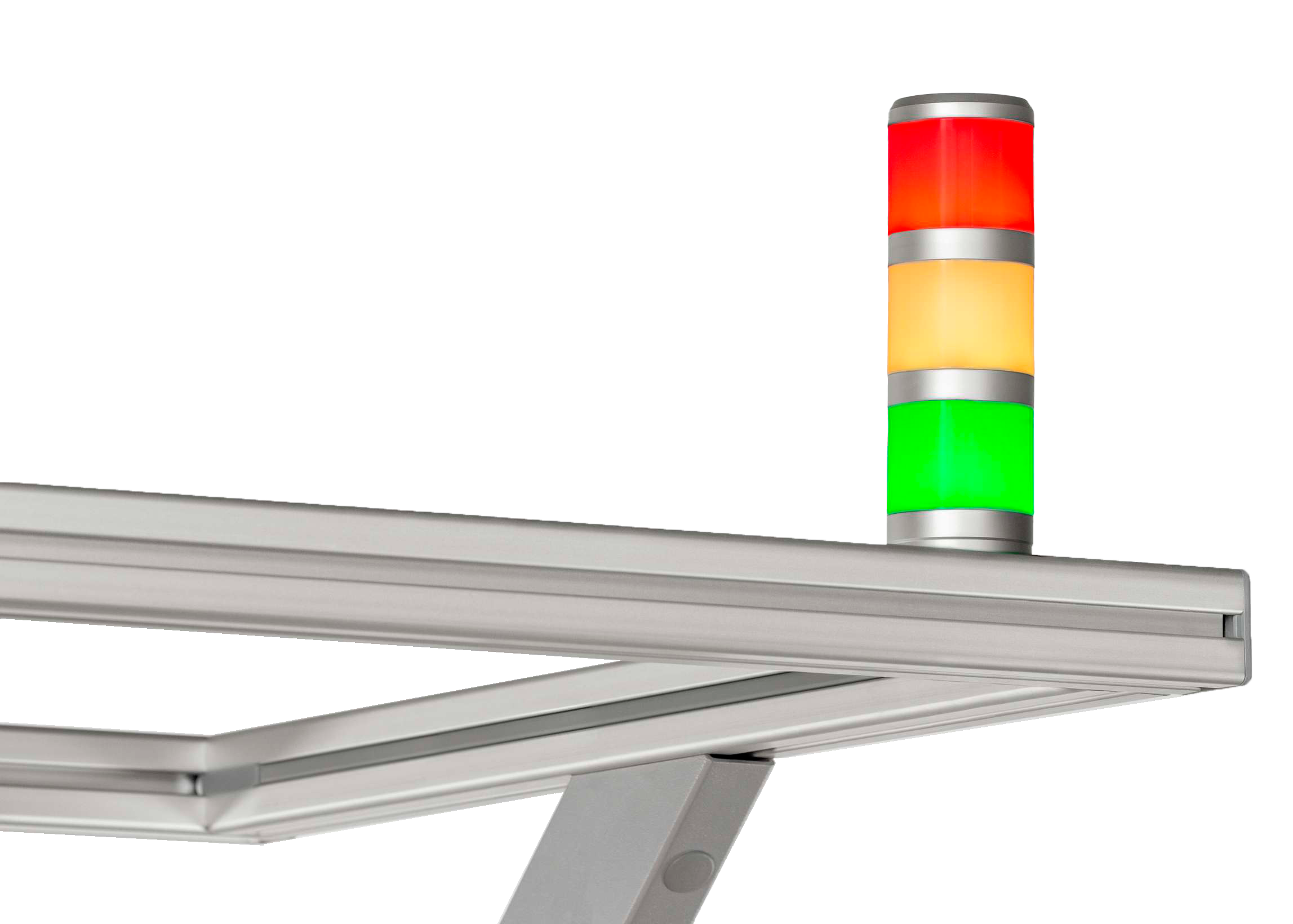 Industrial signaling
Smart signaling for your production and intralogistics operations – discover how to make your processes more efficient and reliable using LED solutions from item.
Initial situation on the packaging line
Staff previously flagged the appliances selected for audit by inserting a reflector manually in the relevant dishwasher’s packaging base. To reliably identify these appliances, staff on the packaging line therefore had to check for the reflector. What’s more, appliances from two separate assembly lines merge on the packaging line, which means different types of packaging are needed. That made the identification process even trickier.
“The main reason for automating the selection and identification of appliances for audit was to make the product audit process more efficient, scalable and future-proof.”
The process of inserting reflectors manually and then checking for them has been replaced by a time-saving visualization solution on the packaging line. “The main reason for automating the selection and identification of appliances for audit was to make the product audit process more efficient, scalable and future-proof,” says Thomas Hitzler, an electrical design engineer in the Assembly, Packaging and Supply Chain team at BSH. The automated removal of selected appliances is also a prerequisite for incorporating AI applications appropriately in audit operations at a later date.
Automatic recognition and visual identification of dishwashers
With the current process, a camera reads a dishwasher’s appliance number before the dishwasher moves onto the packaging line’s conveyor belt. This number is used for a database query to establish whether the relevant appliance has been selected for audit. The type of packaging required can be determined for all other appliances. The result is assigned to the relevant appliance and saved for the rest of the process. A multi-colored LED Strip is fitted at the side of the conveyor belt at both packaging workstations. It has a polycarbonate cover to protect it. The strip is controlled by an LED Strip Controller that communicates with the PLC via IO-Link.
“When an appliance enters the work area, a section of the LED Strip around 70 centimeters long starts to light up.”
As soon as a dishwasher moves onto the belt, its position starts to be recorded. The pulses of a rotary encoder provide the basis for tracking this position. When an appliance enters the work area, a section of the LED Strip around 70 centimeters long starts to light up. Hitzler explains the concept behind the solution: “We use position mode, with each segment corresponding to the width of one dishwasher. In this mode, several segments can be changed dynamically over the entire length of the LED Strip and run alongside the relevant dishwasher.”
A visualization solution that follows appliances and saves a great deal of time
When another appliance enters the packaging line’s work area, a new section of the strip is activated. This means a number of dishwashers can be tracked visually at the same time. In each case, the display is always appliance-specific. “The position and size of the area or surface that is lit up and the relevant color can be adjusted flexibly. I think that’s really clever. What’s more, the controller is suitable for decentralized installation thanks to its IP54 protection and fits perfectly into our digitalization concept thanks to its IO-Link interface,” Hitzler continues, describing the benefits of the item signaling technology that is being used.
The color and blinking mode of the section lighting up provides clear information for packaging line staff:
- Yellow blinking: The appliance has been selected for audit and mustn’t be packaged yet.
- Blue or green: The relevant color identifies the type of dishwasher and indicates that it needs to be packaged. The LED display therefore complements the monitors in the work area.
In this way, the light segments make it much easier for staff to identify appliances selected for audit and to choose the right packaging material. They also significantly reduce the number of manual steps.
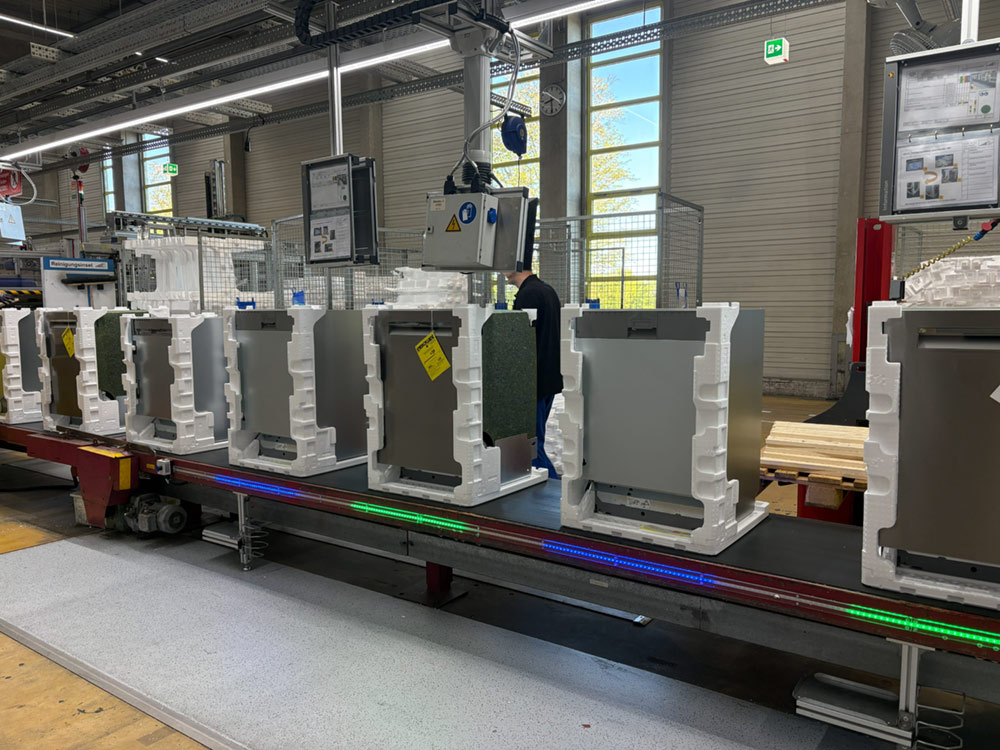
The light segments running alongside the appliances indicate what to do with each dishwasher.
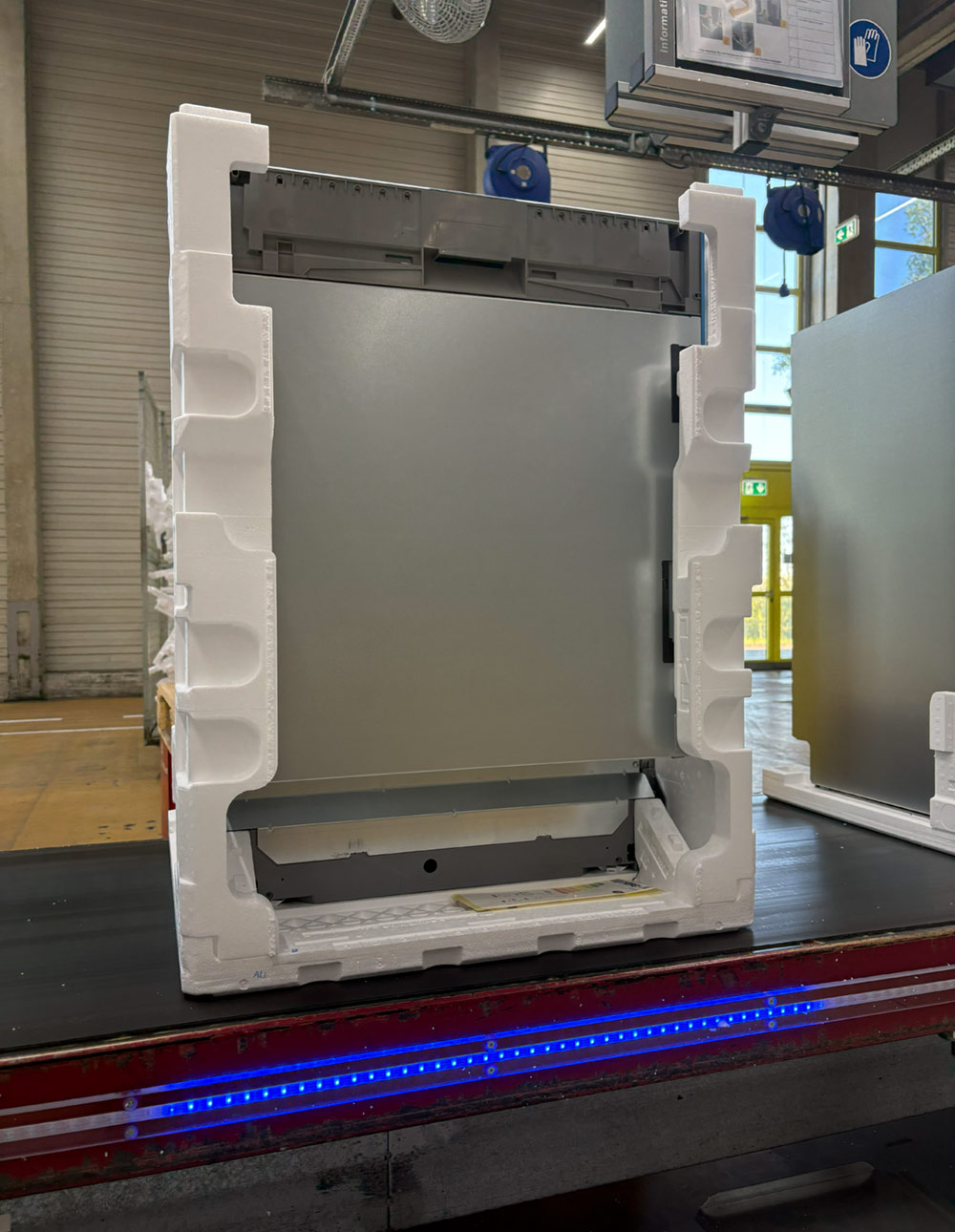
The blue color tells staff a specific type of dishwasher now needs to be packaged.
Optimum collaboration and next steps
During a visit to a trade fair, BSH was specifically looking for a supplier with a portfolio that included controllers for LED strips with an IO-Link interface. One of the companies at the fair recommended that BSH should get in touch with item. “At the time, item was in the process of developing the software for its system, and it incorporated our rather special requirements into its controller’s range of functions,” reveals Hitzler. This is a perfect example of how item approaches product development – we always listen to the market and welcome feedback.
“We also use the LED Strips to indicate whether the side panel is screwed in place correctly (green bar) or not (red bar). The feedback from staff is extremely positive.”
The new technology has been up and running in Dillingen for a year now. The LED Strips also provide information when attaching the side panel. “We use them to indicate whether the side panel is screwed in place correctly (green bar) or not (red bar). The feedback from staff is extremely positive,” Hitzler emphasizes.

Up to ten segments with variable widths and positions can be defined on a single LED Strip in position mode. Thanks to IO-Link, these segments can be moved dynamically on the basis of process data, and their colors and blinking properties can also be modified.
The next step will be to use the solution to identify appliances selected for audit on all packaging lines. Staff will then benefit from standardized visualization throughout the factory.